Sliema Crowned the World's Largest Open-Air Art Museum
Forget the Louvre. Sliema's streets have quietly assembled the most ambitious immersive art collection in Europe, and admission is gloriously free.
Pack the kids. Sliema is now a museum.
In a development art critics are calling “completely unplanned” and “honestly, how is this allowed”, the streets of Sliema have been recognised as the largest open-air art installation on Earth. There are no ticket queues, no velvet ropes, and no curators, and, best of all, no hoarding, no warning signage and no tidy segregated walkway herding you safely past the work. The visitor wanders directly among it, exactly as the artist intended.
Gallery One: Textile (Abandoned)
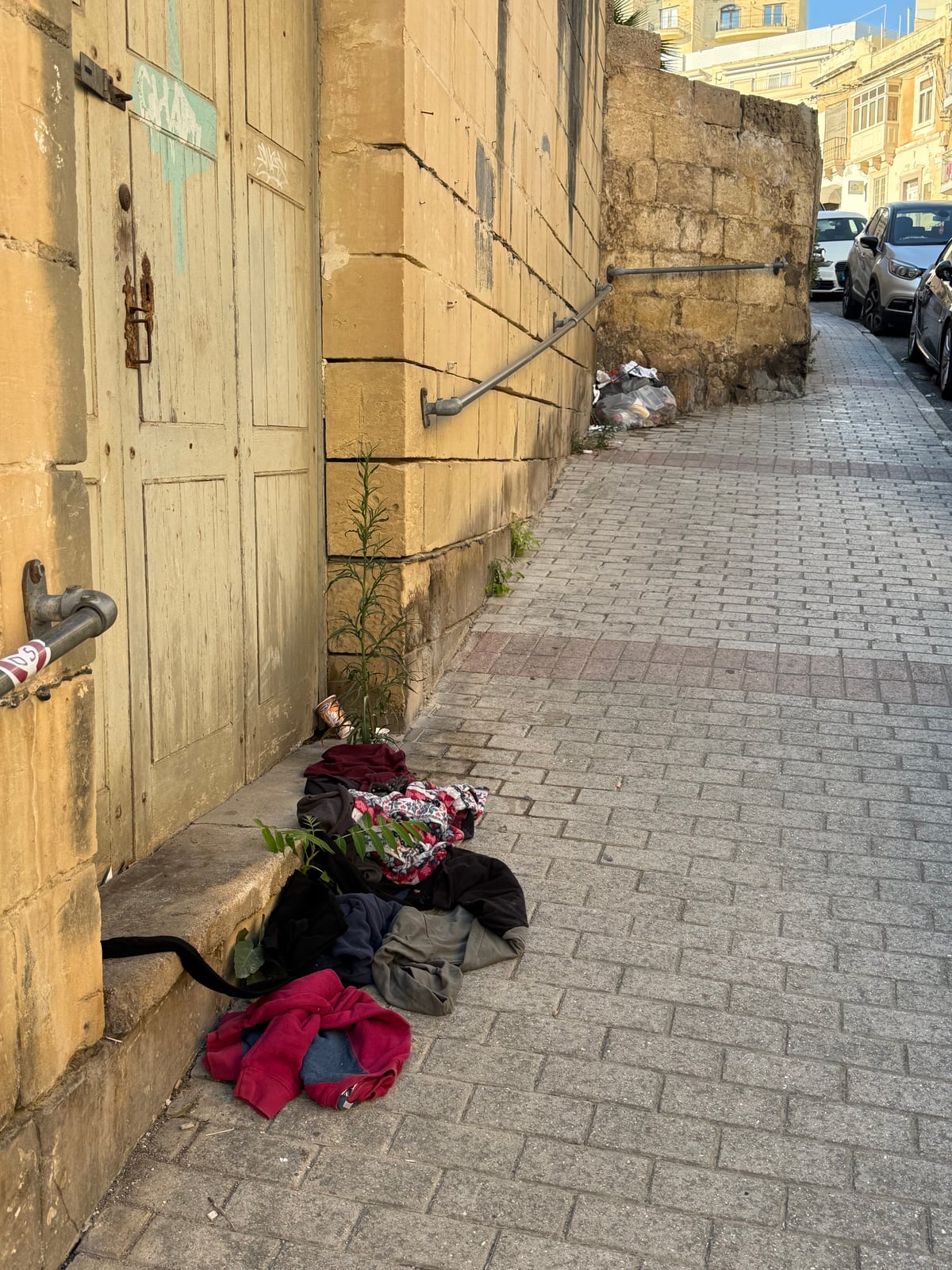
Our first masterpiece: a spontaneous textile installation arranged against a centuries-old doorway (a heap of garments, a single forlorn trainer, a self-seeding weed standing guard). Critics are hailing it as the island’s answer to Tracey Emin: all the confessional disarray of My Bed, relocated to a public pavement and left to weather. Lesser sites would call it “good housekeeping”: walkways kept clear, waste removed before it piles up. Here, the waste is the work. The artist is unknown. The artist is everyone. The artist is nobody, which is the point.
Gallery Two: Reclaimed Timber (Doorway)
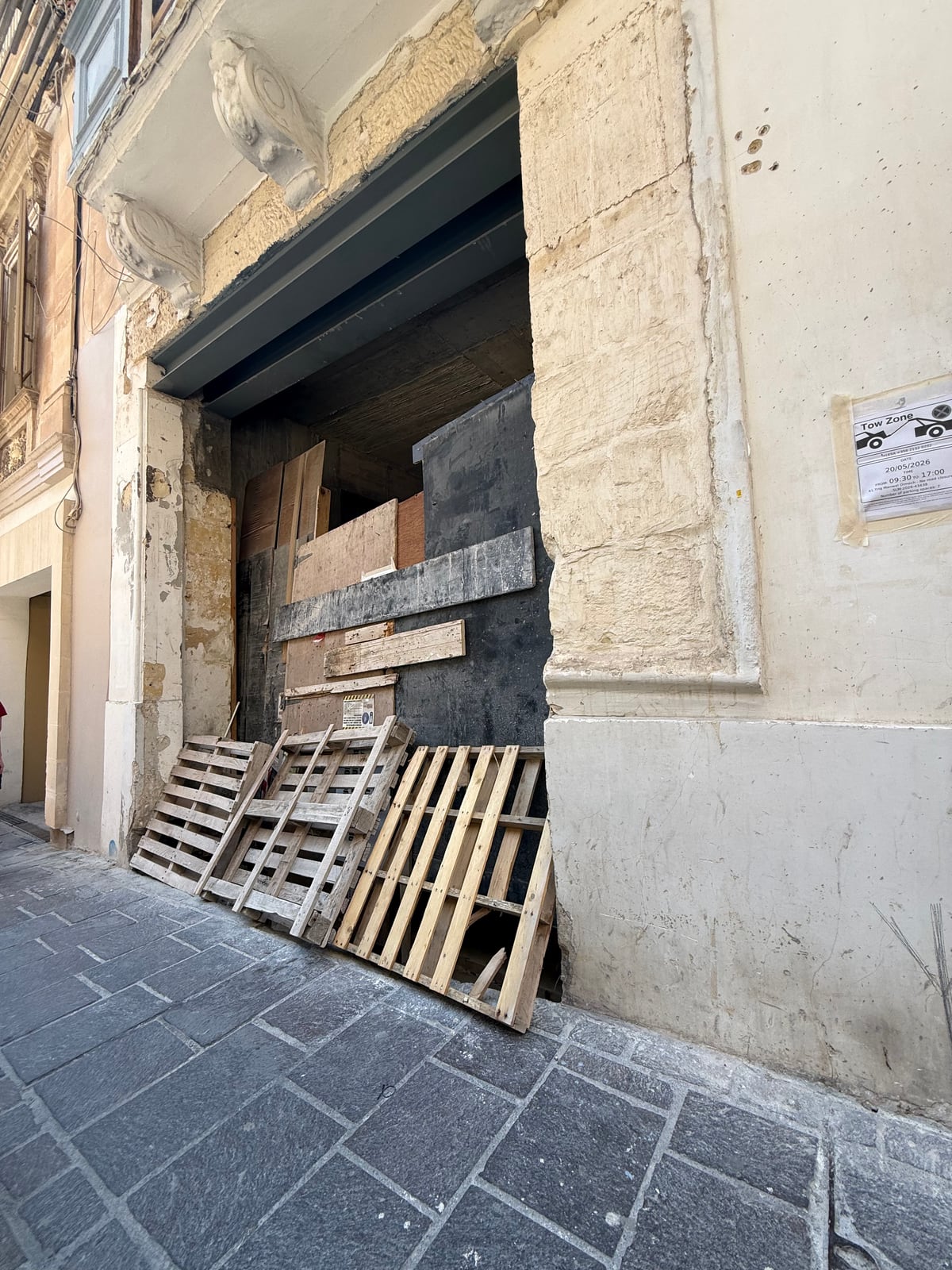
A former entrance, now fully realised as sculpture: a precarious stack of wooden pallets and salvaged planks wedged where a door once opened onto a life. Conventional builders keep materials in a designated store, clear of doorways and escape routes; this work reclaims the doorway as the store. Stacking combustible timber against an exit, it suggests, is simply a braver relationship with fire safety. Bold. Inaccessible. Deeply Sliema.
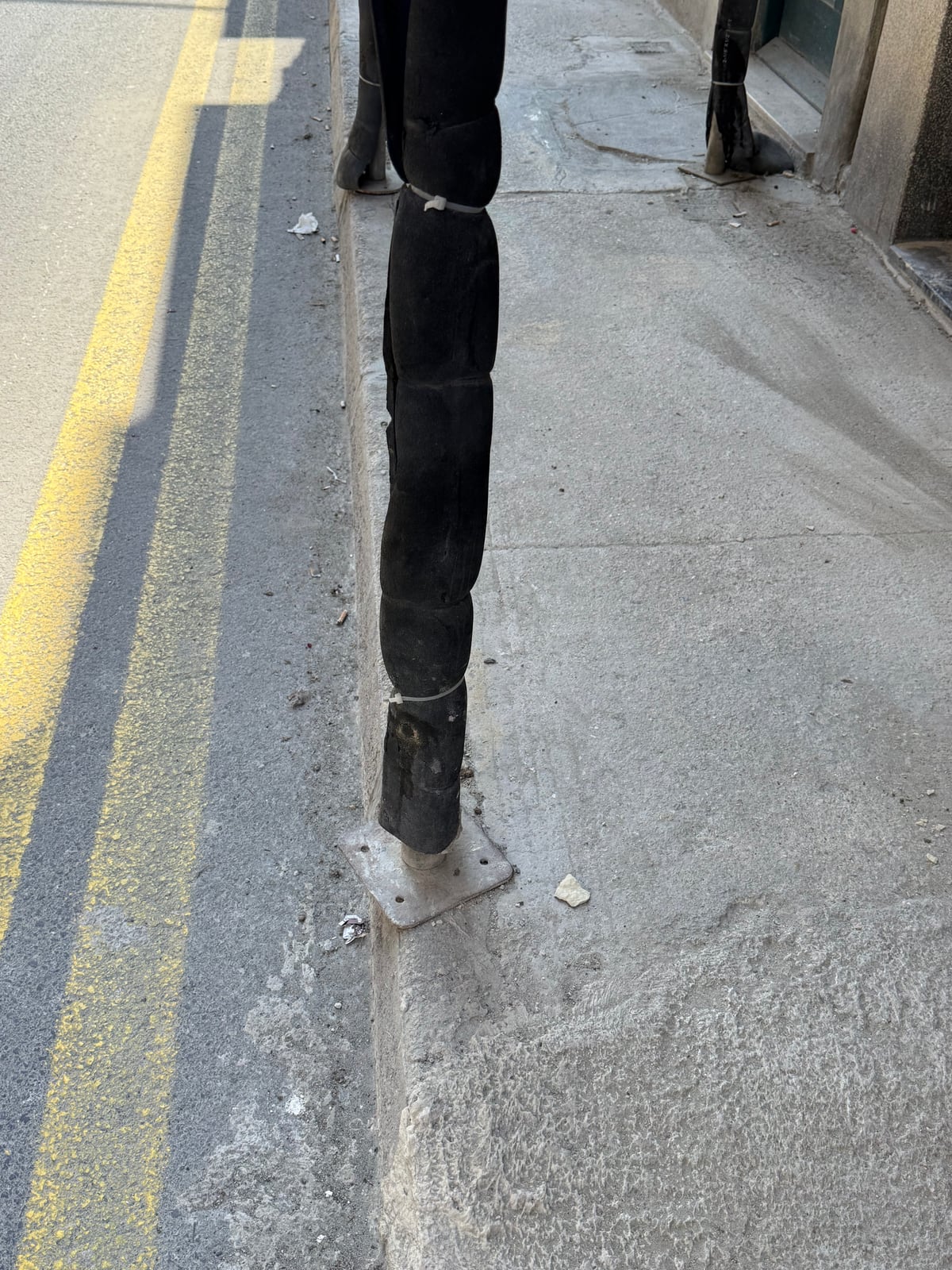
Gallery Three: Colonnade in Black
The collection’s boldest structural statement: a lone black column that has transcended the need for solid ground entirely. A base plate, the pedants insist, belongs on a firm, level footing: spread across a sole board, bearing on something that actually exists. Look closely: this one perches on the crumbling lip of the kerb, bolt holes gloriously empty, half its footprint hovering over the gutter, held upright by little more than confidence and momentum. Engineers would mutter about founding and plumb and load paths. We call it a triumph of the spirit over the foundation.
Gallery Four: Patina (Mixed Media)
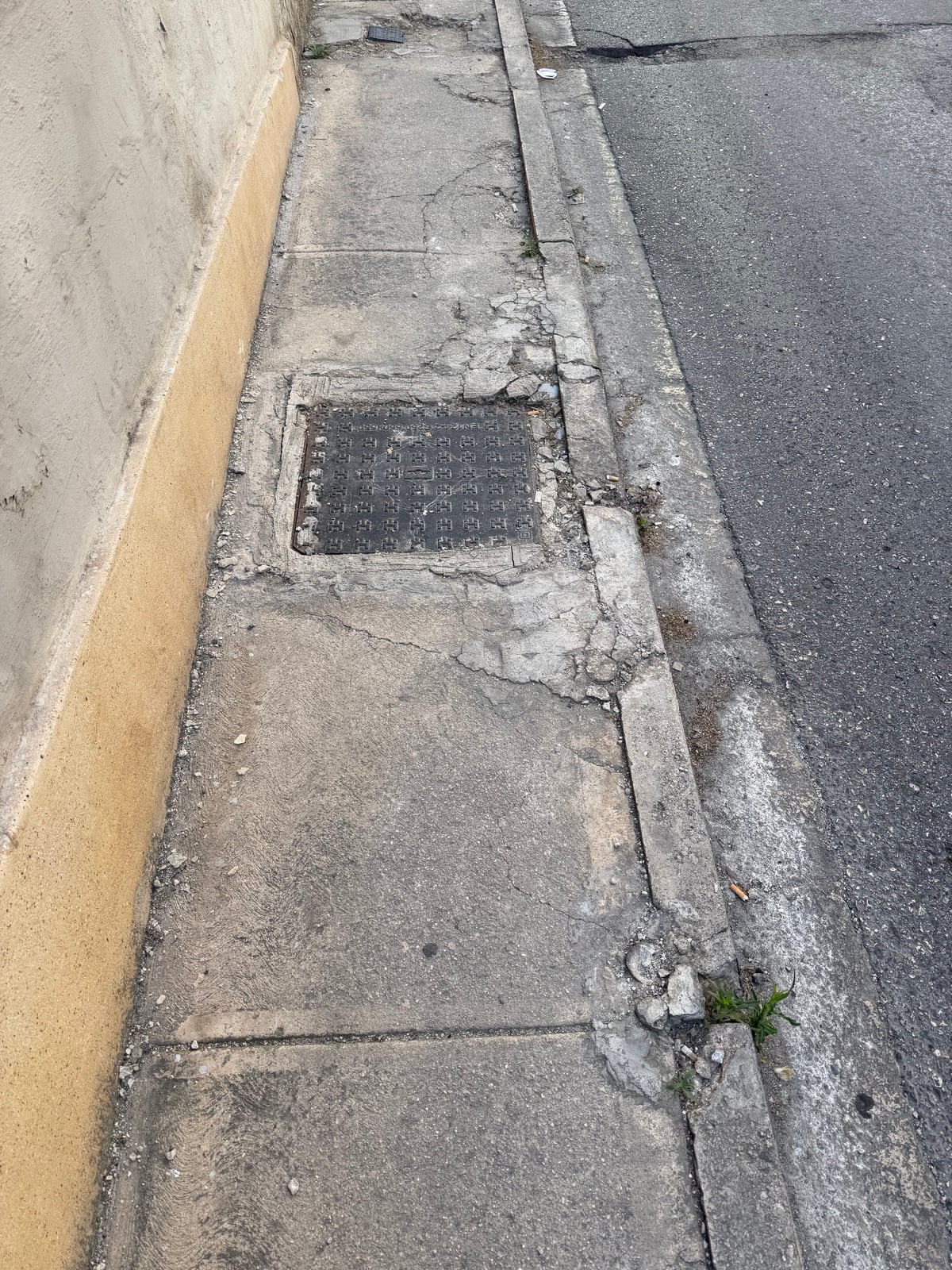
The collection’s quietest triumph: a wall of patched concrete, a rusting access hatch, and a fissure of self-seeding botanicals. Elsewhere, spalling concrete and a loose cover might prompt a routine inspection, even, heaven forbid, a repair. Here they are simply allowed to mature. A meditation on deferred maintenance. Texture you can feel from the road, and quite possibly trip over.
Plan your visit
The museum is open 24 hours, in all weathers, forever. There is no gift shop, because everything is, in a sense, already free to take. No hard hat or hi-vis is provided, or, refreshingly, required. Wear sturdy shoes. Watch your step. Resist the urge to tidy.
Sliema: beautiful once. Conceptual now.